
Spesialtilbud!! for våre spesielle kunder. få rabatt nå!! kontakt oss fra chatten eller klikk “Kontakt oss”.
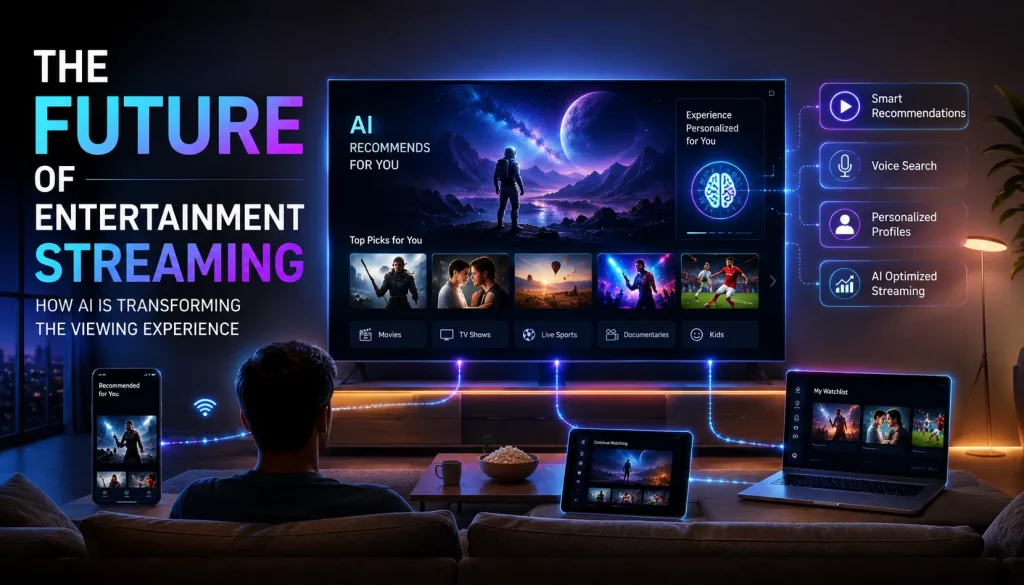
Artificial intelligence (AI) is rapidly transforming the way people discover, watch, and interact with digital entertainment. From personalized recommendations to smarter content delivery systems, AI has become one of the most influential technologies in the modern streaming ecosystem.
As streaming platforms continue to evolve, viewers expect faster performance, more relevant content suggestions, and seamless experiences across multiple devices. AI helps make all of this possible while improving efficiency behind the scenes.
In this article, we’ll explore how AI is shaping the future of entertainment streaming, why it matters to viewers, and what trends could define the next generation of digital entertainment.
Over the past decade, streaming services have expanded far beyond simple video delivery. Today’s platforms analyze viewing habits, optimize streaming quality, and personalize user experiences using advanced machine learning algorithms.
AI enables streaming services to:
As a result, users spend less time searching and more time enjoying content that matches their interests.
One of the most visible applications of AI is content recommendation.
Every time a viewer watches a movie, series, documentary, or sports event, AI systems collect behavioral data such as:
Machine learning models then use this information to suggest content that aligns with individual preferences.
This personalization creates a more engaging viewing experience while helping users discover content they might otherwise overlook.
Traditional search functions rely heavily on exact keywords. AI-driven search engines are far more sophisticated.
Modern streaming platforms can understand:
For example, instead of searching for a specific title, users can search phrases such as:
AI helps deliver more accurate and useful results based on context rather than exact matches.
Video delivery is one of the most technically demanding aspects of streaming.
AI systems help improve playback quality by analyzing network conditions in real time. Rather than delivering a fixed video quality, modern platforms can dynamically adjust video resolution and bitrate based on:
This process minimizes interruptions while maintaining the highest possible picture quality.
For viewers interested in improving their overall streaming setup, understanding how modern streaming solutions can simplify entertainment choices is equally important. Learn more in our guide on how a streaming solution can replace multiple subscriptions:
Buffering remains one of the most frustrating issues for viewers.
AI helps reduce playback interruptions through predictive analytics.
Instead of reacting to network slowdowns after they occur, AI can:
This proactive approach creates smoother viewing experiences, especially during peak usage periods.
Modern streaming platforms rely heavily on efficient video compression.
AI-assisted compression technologies can:
New-generation codecs combined with AI optimization allow platforms to deliver higher-quality video without significantly increasing data consumption.
This becomes increasingly important as 4K, HDR, and future ultra-high-resolution formats become more common.
Managing massive content libraries is challenging.
AI can automatically analyze and classify content based on:
This automation improves:
As streaming libraries continue to expand, intelligent categorization will become even more valuable.
Voice assistants are becoming a standard feature in smart TVs and connected devices.
AI-powered voice technology allows users to:
As natural language processing continues to improve, voice interaction may become one of the primary ways people navigate entertainment platforms.
Modern Smart TVs are increasingly powered by AI-driven features.
These capabilities may include:
AI can automatically adjust:
based on viewing conditions and content type.
Advanced AI systems can:
AI can identify system issues, manage resources, and improve overall device performance.
These improvements contribute to a smoother and more enjoyable viewing experience.
Today’s viewers often switch between:
AI helps synchronize viewing experiences across multiple devices.
For example, a user may begin watching content on a smartphone and continue seamlessly on a television without losing progress.
This flexibility has become a major expectation among modern consumers.
Streaming providers increasingly rely on AI to understand audience behavior.
Machine learning systems can identify:
These insights help platforms make informed decisions regarding content development and user experience improvements.
Many streaming services now use AI-powered support systems.
These tools can:
AI chatbots continue to become more accurate and effective, reducing response times while improving customer satisfaction.
As AI becomes more integrated into entertainment services, privacy remains an important consideration.
Streaming platforms must balance personalization with responsible data practices.
Key priorities include:
Consumers are becoming increasingly aware of how their data is used, making trust an essential factor for long-term platform success.
Several emerging developments may shape the future of streaming:
Future systems could deliver highly customized content suggestions based on real-time preferences and viewing context.
AI-assisted production tools may streamline video creation, editing, and localization processes.
AI can improve accessibility through:
Streaming platforms may gain deeper insights into audience engagement while respecting privacy standards.
Technology alone does not guarantee a better viewing experience. Consumers also benefit from choosing flexible entertainment solutions that match their viewing habits and device preferences.
If you’re exploring modern ways to upgrade your viewing experience, you may also find value in our guide on choosing a smarter TV subscription solution:
Artificial intelligence is becoming a foundational technology within the streaming industry. From personalized recommendations and intelligent search capabilities to advanced video delivery and smart device optimization, AI is improving nearly every aspect of the entertainment experience.
As technology continues to evolve, viewers can expect more personalized, efficient, and seamless streaming experiences across a growing range of devices. The future of entertainment streaming will likely be defined by AI-powered innovation, making content discovery, delivery, and enjoyment smarter than ever before.
AI in entertainment streaming refers to the use of artificial intelligence to improve content recommendations, video quality, search functionality, and overall user experience. It helps streaming platforms deliver more personalized and efficient viewing experiences.
AI analyzes viewing history, watch time, search behavior, favorite genres, and engagement patterns to predict what content a viewer is most likely to enjoy. These recommendations become more accurate as the system learns from user activity.
Yes. AI can monitor internet conditions in real time and automatically adjust video quality to match available bandwidth. This helps reduce buffering, improve playback stability, and maintain a smoother viewing experience.
AI is transforming digital entertainment through personalized recommendations, voice-controlled navigation, smarter content discovery, automated subtitles, real-time translations, and improved streaming performance across multiple devices.
AI helps streaming platforms improve user satisfaction by making content easier to find, optimizing video delivery, reducing technical issues, and creating a more personalized entertainment experience for every viewer.

I am Frank Dawson, a professional content writer covering streaming platforms, media technology, and entertainment trends. I enjoy producing informative and user-friendly content that makes complex topics simple.